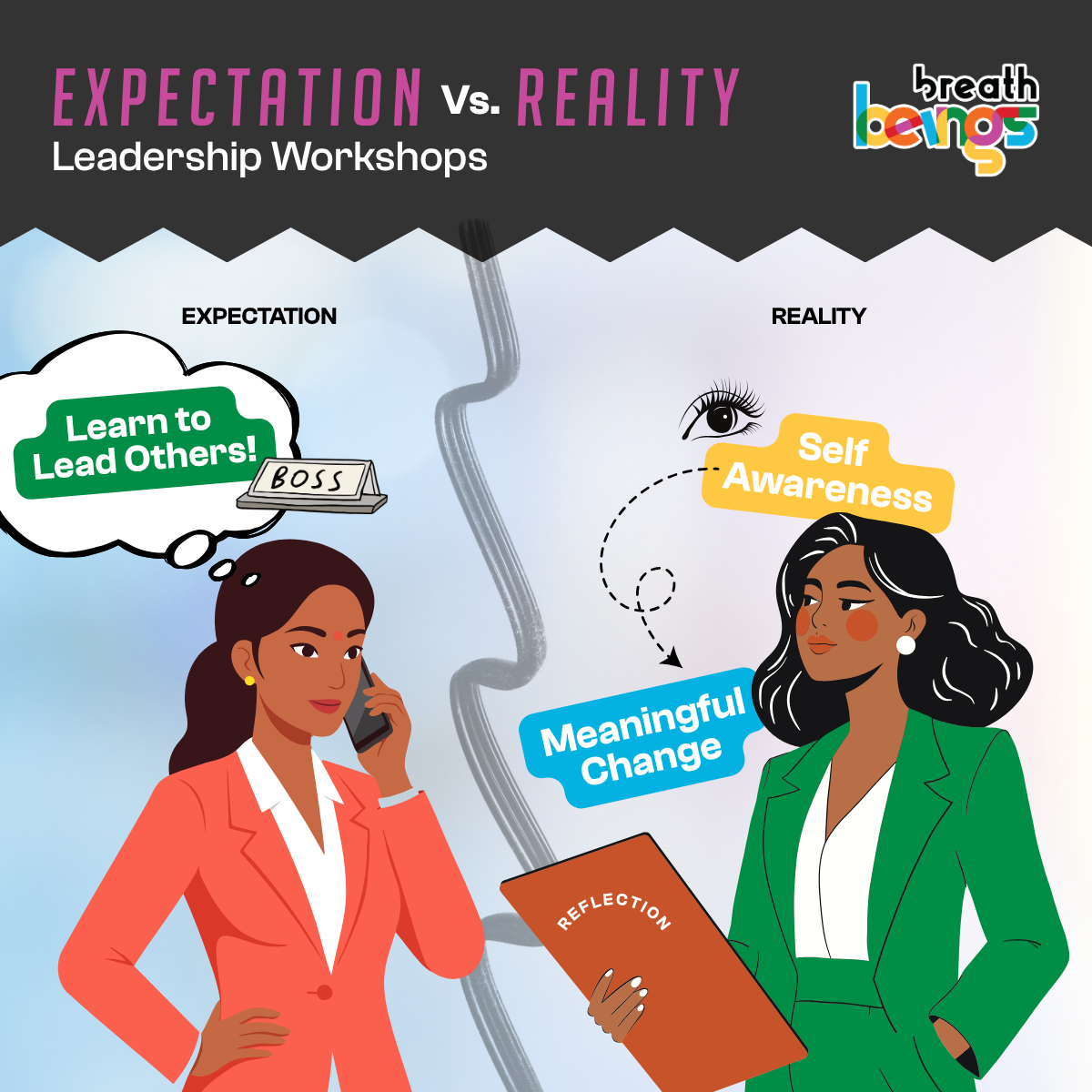
Most people walk into a leadership workshop expecting to learn how to lead others.
The most impactful ones leave them with something even more valuable, a deeper understanding of themselves.
Because leadership isn’t about memorizing frameworks or perfecting management techniques. It’s reflected in the everyday choices leaders make: how they respond under pressure, how they give feedback, how they navigate conflict, and how they make people feel. Before any of those behaviors can change, one thing has to happen first, awareness.
That’s where well-designed leadership workshops create real impact. They don’t just help people build leadership skills; they encourage self-reflection, challenge long-held assumptions, and create the awareness that drives meaningful behavioral change.
Awareness: Where Leadership Growth Begins
Every leader brings their own experiences, beliefs, and habits into the workplace. These shape the way they communicate, make decisions, and lead their teams, often without even realizing it.
A manager may believe they’re empowering their team but unknowingly end up micromanaging. Another may think they’re creating an open environment while consistently hearing only from the loudest voices in the room. These aren’t always intentional actions, they’re often blind spots that have gone unnoticed.
The purpose of a leadership development workshop isn’t to tell leaders they’re doing something wrong. Instead, it’s to create the space to pause, reflect, and look inward.
It invites leaders to ask questions they rarely have time to consider:
- How do others experience my leadership?
- What assumptions influence the way I make decisions?
- Am I leading with intention, or simply relying on habit?
- What impact do my actions have on the people around me?
These questions move the conversation beyond What am I doing? to something much more meaningful: How am I showing up as a leader?
And that’s where real change begins.
Why Information Alone Doesn't Change Behavior
Most leaders already know what good leadership looks like.
They’ve attended webinars, read leadership books, and heard countless conversations about empathy, coaching, feedback, and communication. Yet, understanding these concepts doesn’t always mean they become part of everyday leadership.
Behavior changes when learning feels personal.
The most effective leadership training workshops go beyond presentations and theories. They use real workplace situations, group discussions, reflective exercises, and experiential learning to help participants connect the content with their own experiences.
The moment someone sees themselves in a scenario or recognizes a familiar pattern in their own behavior, the learning becomes more than information, it becomes insight.
And insight is what inspires action.
From Reflection to Action
One of the greatest strengths of a leadership workshop is that it creates something many leaders rarely get in their day-to-day work: time to pause.
Between meetings, deadlines, and constant decision-making, there is very little opportunity to reflect on how leadership behaviors are affecting others.
Workshops create that space.
They encourage leaders to step back, notice patterns, challenge assumptions, and think differently about the way they lead.
More often than not, behavioral change doesn’t begin with a dramatic breakthrough. It begins with small, intentional shifts.
- Maybe it’s listening a little longer before responding.
- Maybe it’s inviting quieter team members into the conversation.
- Maybe it’s replacing criticism with curiosity or choosing to delegate instead of taking control.
These moments may seem small, but over time they strengthen trust, improve collaboration, and create healthier team dynamics.
Leadership Shapes Culture
Organizational culture is shaped by the behaviors leaders demonstrate every single day.
When leaders consistently listen with empathy, encourage different perspectives, admit mistakes, and communicate with transparency, those behaviors begin to influence how teams work together.
Over time, individual actions become shared habits.
That’s why investing in leadership development is about much more than developing better managers. It’s about creating workplaces where people feel heard, trusted, and empowered to contribute.
Culture changes because leadership changes.
And leadership changes when people are given the opportunity to reflect, learn, and grow.
Conclusion
The best leadership workshops don’t promise overnight transformation. They create awareness, encourage reflection, and help leaders make small, intentional changes that improve the way they lead.
Because lasting behavioral change doesn’t begin with learning another leadership model. It begins with understanding yourself, and choosing to lead with greater intention every day.
At Breath Beings, we design leadership development experiences that go beyond theory. Through experiential learning, action based methodologies, and meaningful conversations, we help leaders build the self-awareness and behaviors needed to create more inclusive, empathetic, and high-performing workplaces.
If you’re looking to invest in leadership development workshops that create lasting impact, we’d love to partner with you. Get in touch with us to explore how we can design a learning journey tailored to your people and your organization.